

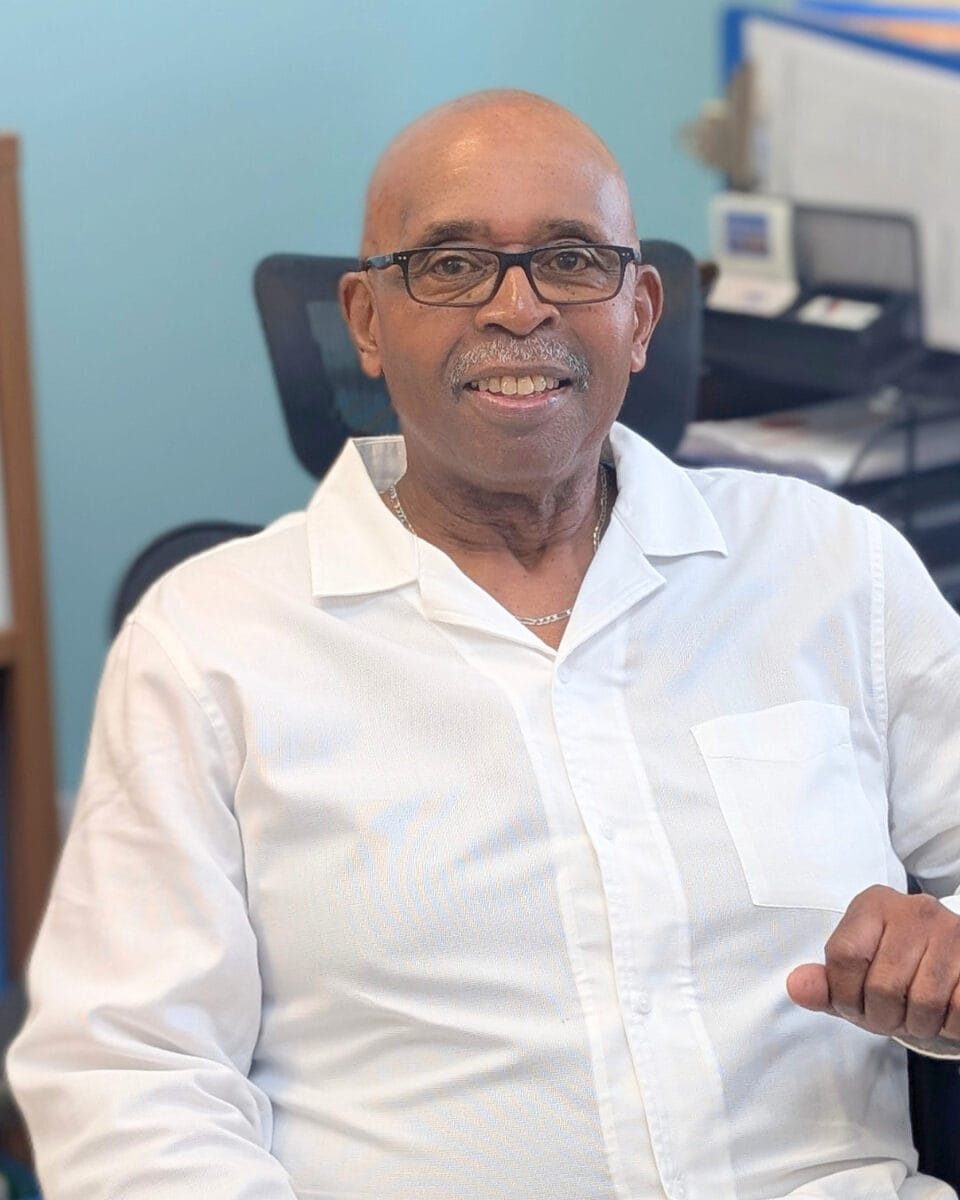
“I’ve been with Alvis for 18 years, and it’s been a blessing because of my own history. As a young guy, I made some terrible choices that had very serious consequences. Now, I get to do work I never imagined would be possible for me. I work in re-entry, and I help people who have been in some of the same kinds of situations I have been in.
I was 20 years old when I became incarcerated, and I’m not trying to make light of it, but it’s life. I learned that if you don’t make good choices and you are misguided, these things happen.
From the moment I went in, I hoped I would get out. I wanted to be a better person, even in there. So, I started to learn and wake up. Things started to change for me, not only from an inmate standpoint or a convict standpoint, but I saw how staff treated people who were doing the work. I did not get caught up in a lot of the craziness. Instead, I focused on weightlifting. I got my body healthy, and I learned to connect with others. I got out of prison, mentally, before I ever got out physically.
In my youth, I thought the only way I measured up was through athletics. My grandmother, who raised me, couldn’t read or write, so I had just accepted that for myself. But then I started to get an education, which was the biggest factor in changing my entire life. I had a third-grade education when I went to prison, but by the time I left, I had a bachelor’s degree. I double majored in psychology and social work.
A lot of times, folks don’t know that I was incarcerated, and I have to interject. Once I connect with them, we reflect on our experiences and how much it means in our lives to be free and able to interact with people who are successful. I’m not the smartest guy in the world. I’m not the best guy in the world, but I try to be the best person that I can be. If I can help them, I’m there.
I think one of the most important things is being open to giving someone a second chance. Not everybody who’s been incarcerated is a bad person. They may have made some bad decisions or choices in their lives, but they’re not bad people, and they just want the opportunity to prove themselves.
I know I disappointed my grandma tremendously when I failed. She didn’t raise me like that. But I think she’s smiling down on me now, and I think she’d be proud to see the man I’ve become.”
– Robert “Junior” Brown is a Workforce Development Specialist for Alvis, an organization that helps individuals with justice involvement successfully return to our communities.