

If you’ve driven along Interstate 70 recently, you might have noticed a beautiful solar array in Bridgeway Academy and Therapy Center’s backyard. That array is not just generating energy, it’s generating opportunity.
Through an innovative partnership led by Clean Energy Ventures, the Columbus Partnership, and Community Renewable Energy, nonprofits across Central Ohio are beginning to access solar power in a way that was previously out of reach – unlocking millions in long-term savings that can be reinvested directly into their missions.
And for organizations like Bridgeway and The Buckeye Ranch, the impact is already taking shape.
But these projects are just the beginning. Through the broader Impact Solar initiative, this work aims to deploy 40 megawatts of solar across approximately 75 nonprofit and public-serving organizations in Central Ohio, generating an estimated $130 million in energy savings for nonprofits and government agencies across the state. The initiative is projected to spur $116 million in economic growth across Ohio, demonstrating that investments in clean energy are also investments in stronger local economies.
For most nonprofits, solar has long felt like a “nice-to-have” that never quite makes it to the top of the priority list. Between limited capital, competing needs, and operational constraints, investing in long-term infrastructure can feel impossible. That’s exactly the barrier this initiative is designed to remove.
“We focus on nonprofits and government agencies and low- to moderate-income communities specifically because the biggest barriers to access to solar are for these groups,” explains Laura Recchie, Chief Operating Officer of Community Renewable Energy.
Energy costs are the second-highest operational expense for many nonprofits, behind only salaries. According to the Environmental Protection Agency (EPA), as much as 30 percent of the energy consumed in hospitals, worship facilities, and other commercial buildings is wasted, leading to enormous opportunities for energy efficiency improvements and energy savings.
Community Renewable Energy handles everything from financing and installation to maintenance, so nonprofits can access solar energy with no upfront cost: they only pay for the power they use.
Even more importantly, that cost is predictable. Power rates are locked in through long-term agreements, helping nonprofits stabilize one of their most volatile operating expenses.
Bridgeway’s array will create an estimated $2.4 million in energy savings over the lifetime of the system, and those savings start on day one. Recchie explains that their initial power purchase agreement price is lower than what they’re paying for electricity now. That means every dollar saved can be redirected toward what matters most: students, staff, and program growth.
“We were inspired to pursue solar as a way to address rising operational costs while strengthening Bridgeway’s long-term sustainability,” said Co-Founder/CEO Abby David. “By reducing energy expenses, we can reinvest more directly into our programs and the individuals and families we serve. It’s a practical, forward-thinking decision that reflects our commitment to both financial responsibility and our mission.”
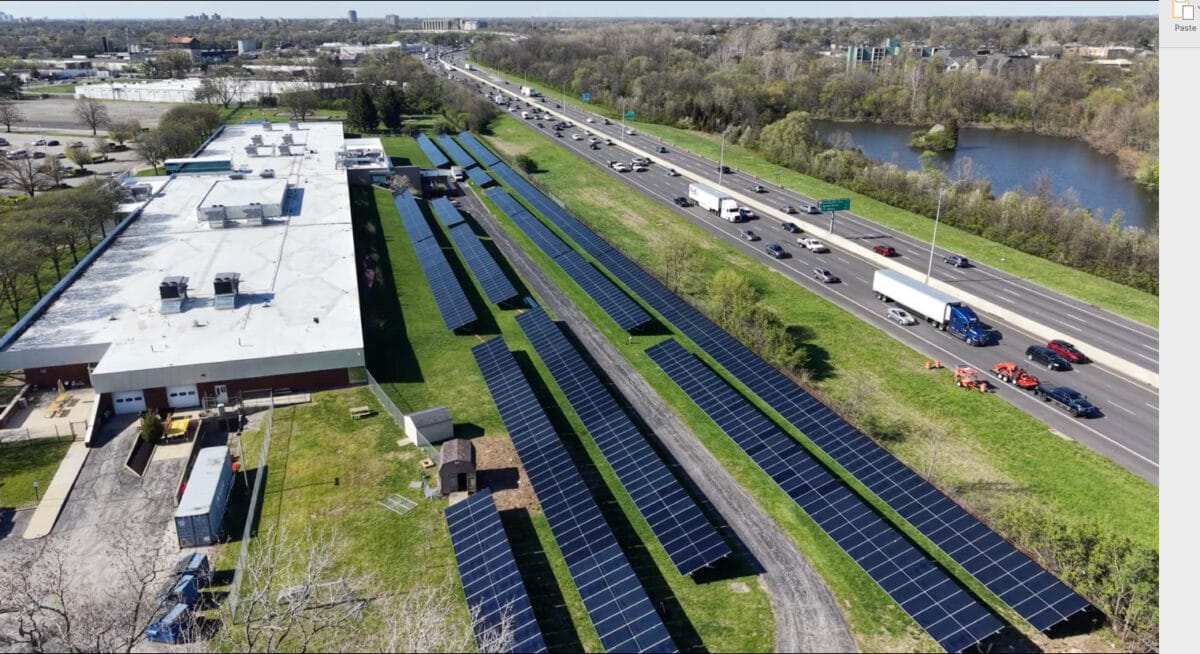
Beyond finances, Bridgeway’s highly visible solar field also serves another purpose: inspiration. As Recchie explains, “People are more likely to adopt solar when they can see it.”
The ripple effect of a sustainability effort like this is far-reaching. A ripple that includes:
- Stronger nonprofits with more resources for programming;
- More resilient neighborhoods with long-term community assets;
- A more stable energy grid through distributed generation; and
- Improved public health outcomes
In fact, the Bridgeway project alone is expected to generate $3.2 million in avoided healthcare costs due to improved air quality and reduced emissions.
And at scale, those benefits multiply. Across the Impact Solar initiative, projects are expected to displace 68 gigawatt-hours of fossil fuel generation every year and generate $167 million in regional health benefits through reduced pollution.
“It starts feeling like the closest thing to a policy silver bullet we can get,” Recchie adds.
Just a few miles away, The Buckeye Ranch array was just completed. The vision is clear: lower operating costs and greater flexibility to expand services for the children and families they serve.
“We partnered with Impact Solar and Praxia Partners to install solar panels at our headquarters as it aligns with The Buckeye Ranch’s long-term strategy to reduce operational costs,” said Vickie Thompson-Sandy, President and CEO of The Buckeye Ranch. “Lowering our energy costs allows us to reinvest those savings into programs and services that meet the mental and behavioral health needs of children, youth, and families in our community.”
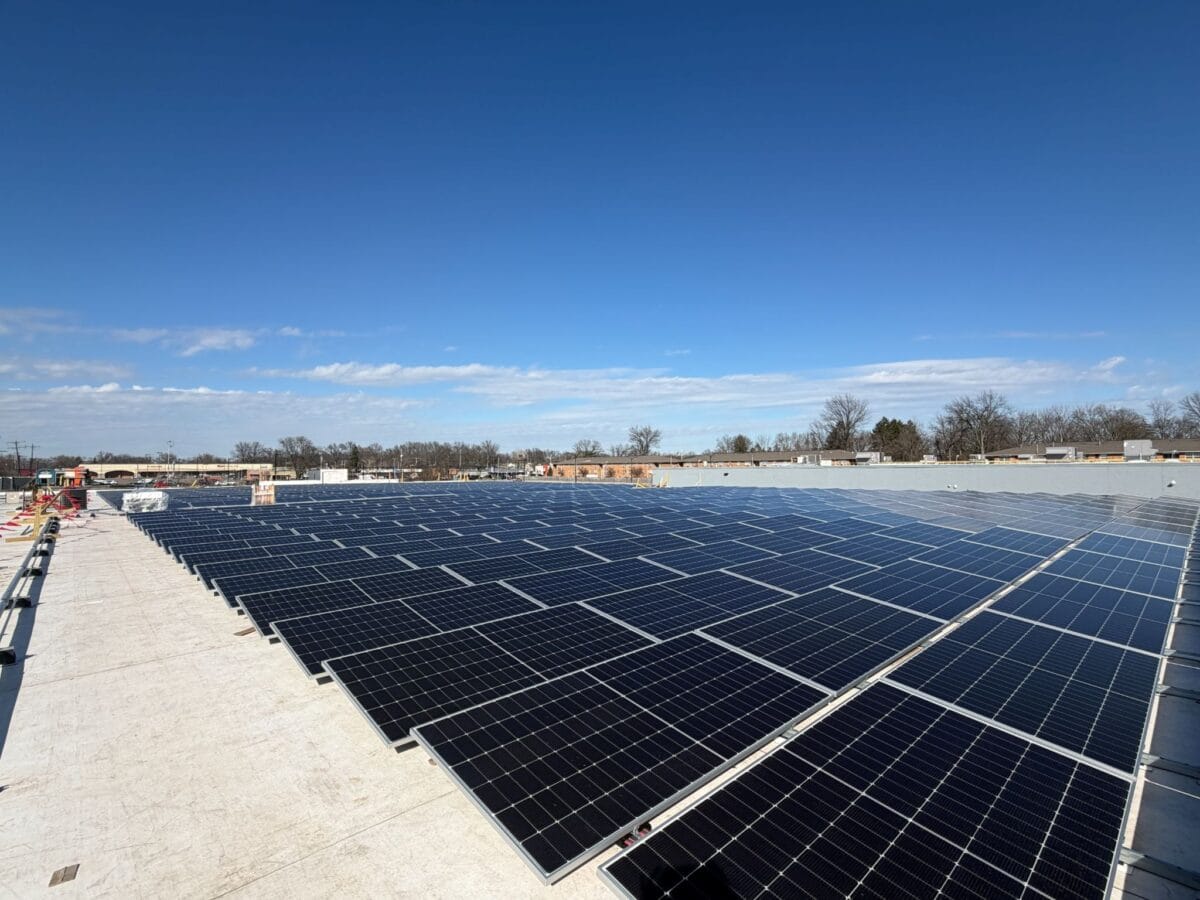
Like Bridgeway, The Buckeye Ranch didn’t have to take on the financial burden or operational complexity of solar. Instead, they gained a long-term asset without sacrificing short-term capacity.
One of the most compelling aspects of this initiative is how deeply Impact Solar understands the nonprofit sector’s reality in 2026.
“Nonprofits are faced with a competition of needs every day,” Recchie explains, referencing the difficult choice between immediate services and long-term investments. That’s why flexibility is built into the model.
“There’s no cookie-cutter solution, because there’s no cookie-cutter nonprofit,” she says.
Whether an organization has access to capital, donor interest, or unique facility constraints, each project is tailored to maximize impact.
Ready to explore what’s possible?
If you’re part of a nonprofit in Central Ohio, you might be wondering: Could this work for us?
The answer is: You should find out! It starts with getting a feasibility assessment. You can also receive a no-cost energy audit from The Columbus Region Green Fund.
These feasibility assessments are offered at no cost, providing a clear picture of what’s possible, even if a project isn’t immediately viable. For organizations that can’t install solar today, future solutions like community solar could open new doors.
At a time when energy costs are rising and nonprofit resources are stretched thin, this model offers something rare: a way to reduce costs, strengthen operations, and invest in your mission without taking on additional risk.