

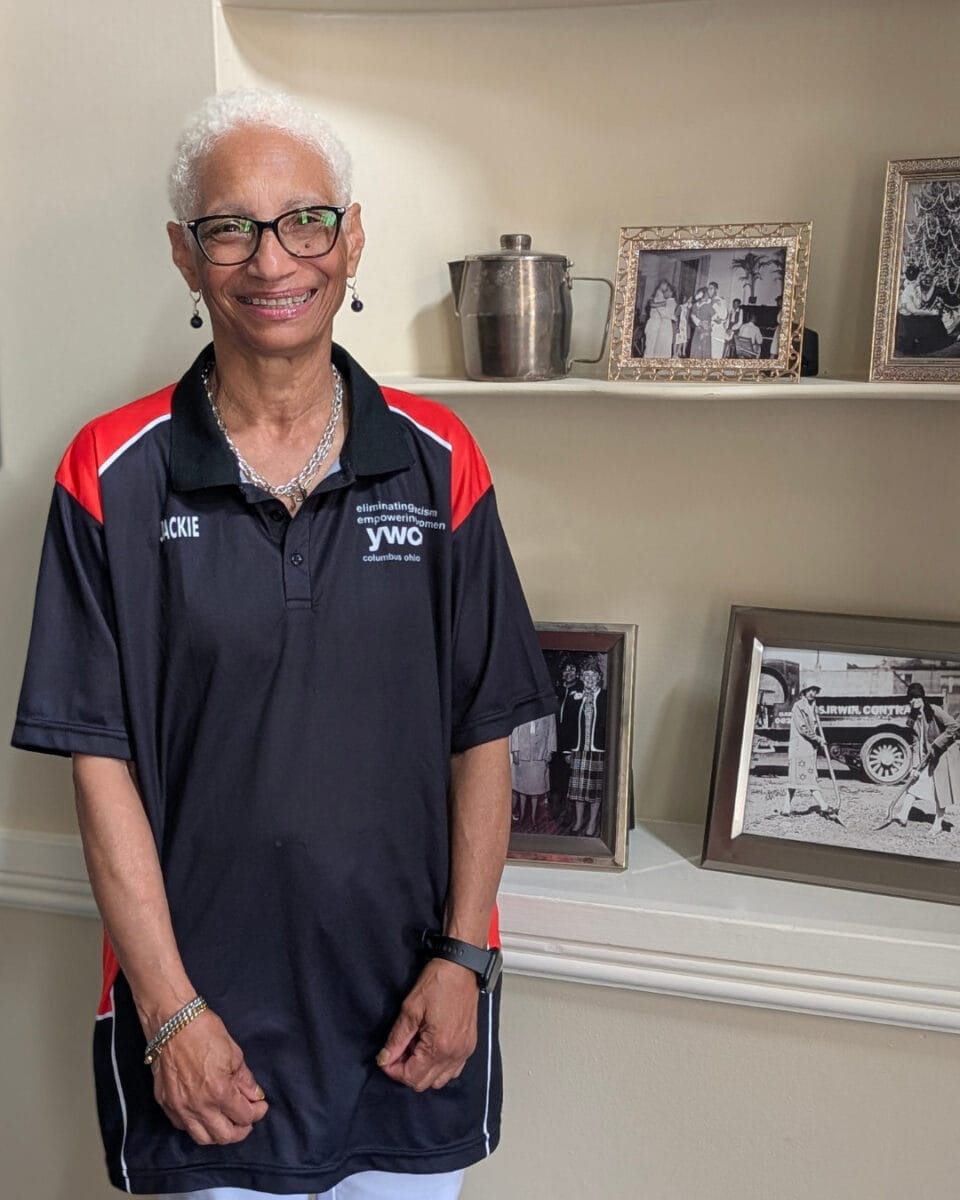
“I grew up in a very tragic type of situation. Trauma, alcoholism, stuff like that. But my mom was always my rock. Any time I was struggling, I’d go hang out at her house. But when she passed, I was homeless and had to go back to living with my ex. It was a bad time in my life. But my mom often told me to pay attention and to learn. She said you’re never too old to learn. So that’s what I did.
Now that I’m in recovery, I put everything into my work. It’s a very important job at the front desk. We work with everybody in the building, staff and the residents. We take care of all the operations, the pantry, and anything the residents need. We are engaging the ladies and supporting them while they’re here with us. It’s a great place to be, especially when it comes to those with mental health concerns and challenges. There’s so much they can receive while they’re at YW.
I’m very strict with the women. They often say, ‘Miss Jackie, you’re mean.’ But I say, ‘No, I’m not. I’m very firm.’ I don’t like foolishness. I’m too old for that.
Sometimes they act. One day they are telling me all the things they are doing to change their situation, and the next they are back to their old ways. Everything that’s happened to them is someone else’s fault. Then I look at them and say, ‘I’ll talk to you later. Come back when you actually want to help yourself. I’ll give you all the tools you need.’
We had one woman in another support group about five years ago who was here from Baltimore. She was in one of the sober houses, and had struggled with opiates real bad. But we got her to meetings and to a doctor. Then she got a job, and within two years she went back home. We keep in touch, and now she’s going to school to be a nurse.
A lot of people might say that two years is such a long time. But it’s not. That’s actually really fast. Many of these women can’t find jobs that will accept them. They can’t save enough to pay for court and get custody of their children. They can’t afford rent. And they’re working hard. There used to be a lot of free legal support and free housing that they had access to, and that just doesn’t exist anymore. So they have to work much harder and much longer before they see any kind of stability, and that really messes with their sobriety. It’s hard for them to dream, and they just get stuck in that bubble.
Some of the women here are scared to open up, and they are ashamed to say that they don’t know how to read or write very well. I say, ‘Well, I don’t either, so let’s go to the library.’ And I remind them, ‘If I could do it, you can certainly do it too.’”
– Jackie Johnson is the front desk engagement specialist at YWCA Columbus, an organization dedicated to eliminating racism, empowering women, and promoting peace, justice, freedom, and dignity for all.