

As many Americans were celebrating the holidays of Passover and Easter, nonprofit leaders were bracing and mobilizing for a wave of executive orders and actions from the White House. The impetus seemed to be the fight it picked with one of America’s best-known and best-resourced nonprofits, Harvard University. Buoyed by comments that Donald Trump made from the Oval Office, anxiety was billowing that the Trump Administration was preparing to challenge the tax-exempt status of environmental and other nonprofit organizations disfavored by the White House—and insert itself into the operations and finances of the 100,000+ nonprofits that currently receive federal funding.
5,000 nonprofits convened in a national webinar that Friday afternoon, talking through the anticipated barrage of orders—and their legal dubiousness.
Thanks for reading State of Affairs: A Public Policy Newsletter for Nonprofits! Subscribe for free to receive new posts and support my work.Subscribed
At HSC, we followed suit by notifying our members of what seemed to have become inevitable: An escalated assault on nonprofits as we approached the 100th day of the new administration’s tenure.
Fortunately, the White House is yet to take any such actions. But reassurances from the Administration that it has no such plans are rightfully being met with skepticism. So we’re advising all our members, especially those receiving federal funding and engaging in environmental or advocacy work, to prepare to defend their 501c3 status.
Here’s how the Polsinelli law firm is advising nonprofits:
- Audit Advocacy and Activities. Make sure your lobbying, programming and public-facing content align with your exempt purpose and IRS standards.
- Review Governance & Oversight. Ensure your board understands its fiduciary role in legal compliance — not just mission direction.
- Compile Basic Organizational Information for Potential Audits. Begin compiling materials that commonly would come up in an audit or investigation, such as tax returns, relevant agreements and grant or scholarship program materials.
- Develop a Rapid-Response Framework. Have a plan for if (or when) your tax status, operations or speech get questioned by regulators, donors or the media.
In the interim, the Administration’s targeting of funding for nonprofits has continued. Last Friday night, $400 million in Americorps grants were illegally terminated, ending the service of 32,000 people across the country, and bringing into question the future of the popular 32-year-old program. We are still assessing the impact on our members, but here’s how they’re affecting I Know I Can and the young people it serves according to its longtime Executive Director, Katina Fullen.
We have 14 recent college graduates–most of them Columbus City Schools graduates–serving our community as AmeriCorps College and Career Guides through IKIC. This week, I had to tell them that 100% of the program’s funding has been cut effective immediately. These guides have been serving over 3,000 CCS middle schoolers with college and career exploration and exposure curriculum. This is our 16th year as an AmeriCorps host site.
It’s important to note that not all Americorps programming in Ohio has been affected at this time. However, the White House had already placed most Americorps administrators on leave, and there is dwindling hope that the program will be operational later this year. That would stop the annual work of 200,000 people, doing good work across the country, who will no longer be doing critical work in our communities—many of them at our nonprofits.
Beyond people and programming, they’re also targeting the data that has become essential to the shaping and doing of nonprofits’ work addressing inequities and disparities:
The Department of Health and Human Services, now led by Robert F. Kennedy Jr., laid off the 17-person team in charge of the National Survey on Drug Use and Health, which for more than five decades has tracked trends in substance abuse and mental health disorders. The department’s Administration for Children and Families is weeks behind on the annual update of the Adoption and Foster Care Analysis and Reporting System, the nationwide database of child welfare cases, after layoffs effectively wiped out the team that compiles that information. And the department has placed on leave the team that oversees the Pregnancy Risk Assessment Monitoring System, a collection of survey responses from women before and after giving birth that has become a crucial tool in trying to address the country’s disconcertingly high rate of maternal mortality.
The Centers for Disease Control and Prevention has eviscerated divisions that oversee the WISQARS database on accidental deaths and injuries — everything from fatal shootings to poisonings to car accidents — and the team that maintains AtlasPlus, an interactive tool for tracking HIV and other sexually transmitted diseases.
This all comes amidst trickling reports of the White House’s forthcoming budget proposal, which will propose enormous cuts to a flurry of essential safety-net programs. Congress would have to approve this budget; it will be imperative for all of us to engage our U.S. Representatives and Senators, and urge them to reject cuts to child care—they want to eliminate Head Start—as well as health research, education, housing assistance, community development, and the elderly.
We have to navigate this turbulence together. That’s the only way through.
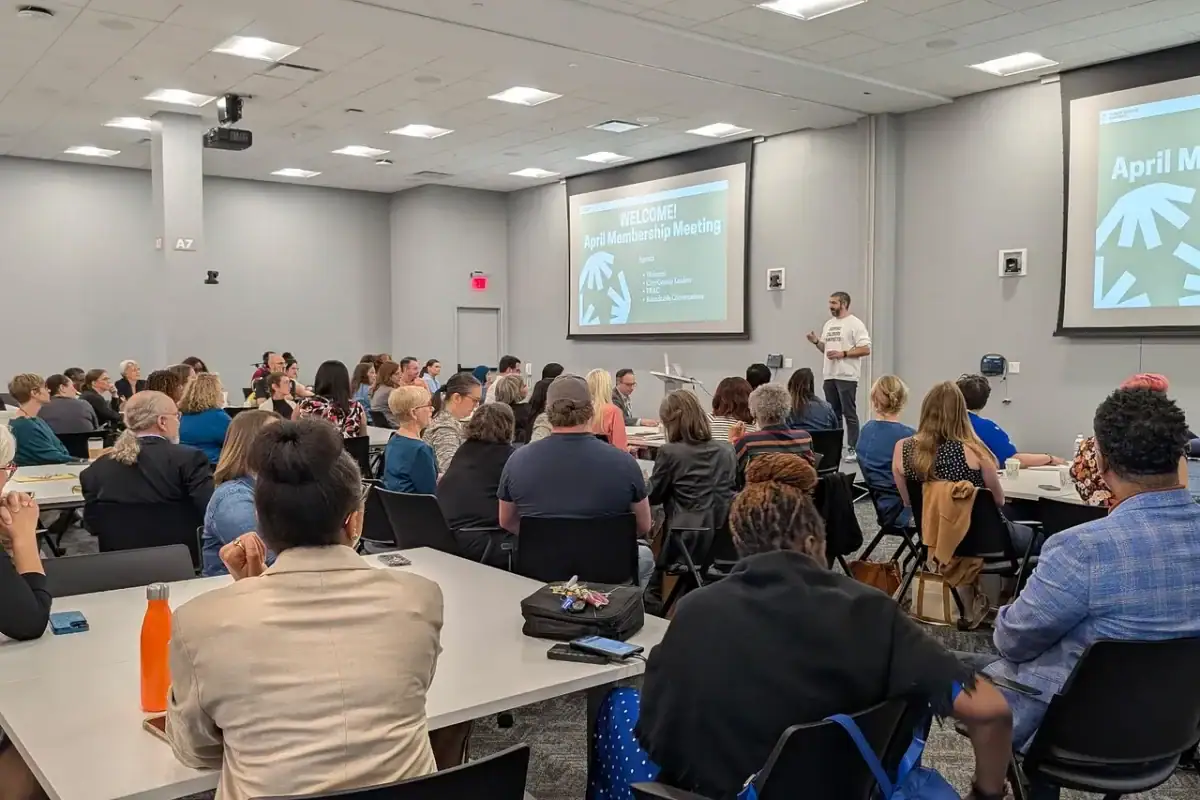
That is why we were so honored to host our April membership meeting on Friday, with 100 nonprofit leaders together in a room, brainstorming the ways in which we can ensure services continue being available for our community even as federal funding’s retreat accelerates. The room could have been filled with trepidation and cynicism given the state of affairs. But it was not. It was filled with energy, with enthusiasm, with unity, and with hope.
As one of our CEOs told me at the meeting’s conclusion:
“We have to take care of each other. And we will.”
Want these updates straight to your inbox? Sign up for State of Affairs: A Public Policy Newsletter for Nonprofits!